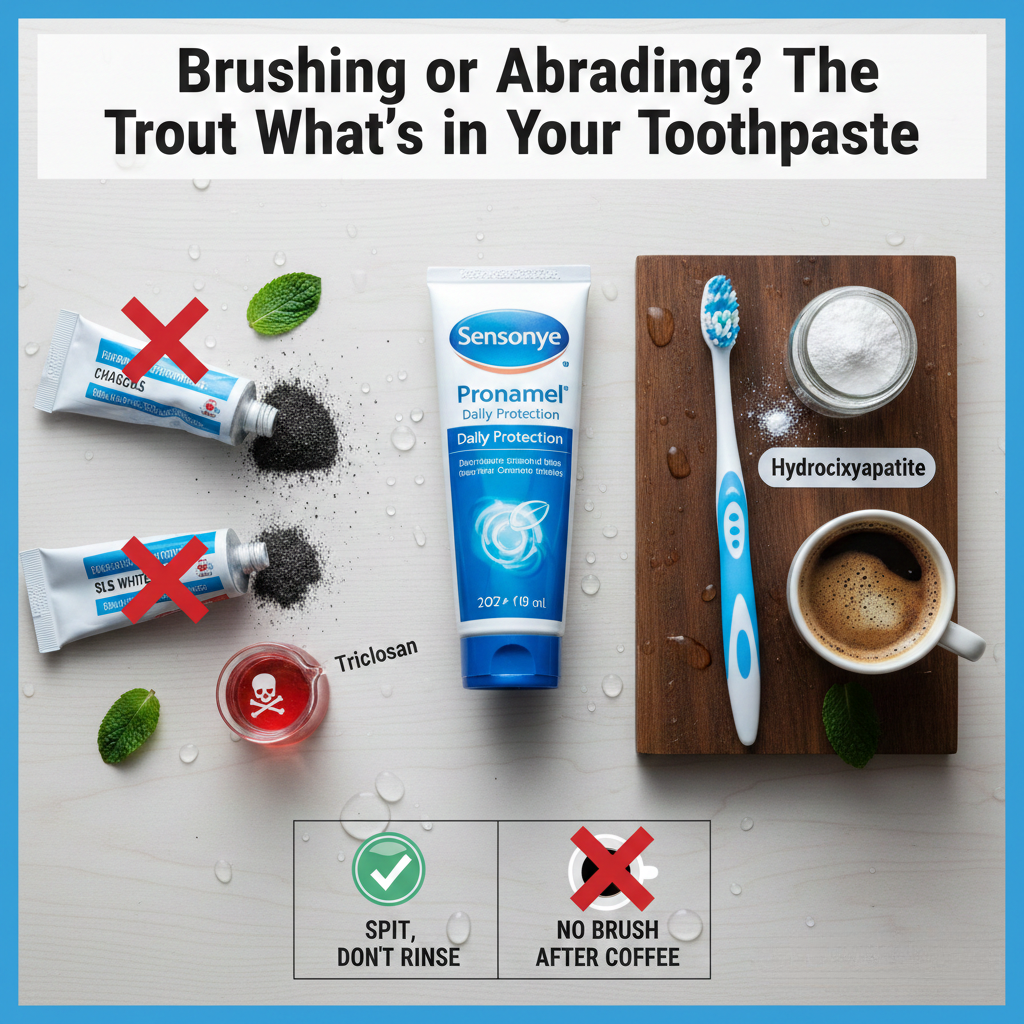
What to Buy and What to Avoid
We’ve been told since childhood: “Brush twice a day.” But here is a reality check—if you’re using the wrong toothpaste, you might actually be scrubbing away your teeth’s most valuable defense: your enamel.
For the Friday Express readers, let’s peel back the label and see what’s really going on inside that tube, and why one specific brand consistently wins the dental “gold medal.”
The “Whitening” Trap: Abrasives vs. Enamel
Most people buy toothpaste to get a brighter smile. This has led to an explosion of “charcoal” and “extra-whitening” products. The problem? Most of these don’t actually bleach your teeth; they use abrasives to scour off surface stains.
Dentists measure this using the RDA (Relative Dentin Abrasivity) scale.
-
Low Abrasive (0–70): Safe for daily use.
-
Highly Abrasive (150–250): Can permanently wear down enamel and cause gum recession.
If your toothpaste feels “gritty,” it’s likely acting like sandpaper. Once your enamel is gone, it’s gone forever.
The Top Recommendation: Sensodyne Pronamel Daily Protection
If you want the best balance of cleaning power and protection, the industry standard is Sensodyne Pronamel.
Why it’s the superior choice:
-
Enamel Hardening: It is specifically formulated to help minerals penetrate deep into the enamel surface, re-hardening acid-softened teeth.
-
Low RDA Value: It has an RDA of approximately 34, making it one of the gentlest toothpastes on the market.
-
High Bioavailability of Fluoride: It doesn’t just have fluoride; it is formulated without certain additives that usually inhibit fluoride’s ability to bind to your teeth.
What to Avoid: The “Red Flag” Ingredients
Before you buy your next tube, check the back for these three common offenders:
1. Sodium Lauryl Sulfate (SLS)
This is a foaming agent found in everything from dish soap to floor cleaners. While it makes your mouth feel “bubbly,” it’s a harsh surfactant. For many, SLS causes chronic canker sores and dries out the oral mucosa, leading to bad breath.
2. Activated Charcoal
It’s trendy and looks cool on Instagram, but charcoal is often too abrasive. Furthermore, charcoal can settle into cracks or gaps in dental work (like crowns or veneers), leaving permanent gray lines.
3. Triclosan
Historically used to fight gingivitis, the FDA has flagged Triclosan for its potential to contribute to antibiotic resistance and hormonal disruption. Most major brands have removed it, but it still lingers in some “budget” or “imported” brands.
Top Toothpaste Recommendations For You
| Product Name | Best For… | Why You Need It |
| Sensodyne Pronamel Daily Protection | Acid Erosion & Sensitivity | It’s the “gold standard” because it hardens acid-softened enamel and has an ultra-low abrasivity (RDA) score, keeping your teeth thick and strong. |
| Colgate Total Plaque Pro-Release | Gum Health & Plaque | Uses Stannous Fluoride technology to fight bacteria along the gum line for 24 hours. Ideal if you struggle with early signs of gingivitis or heavy plaque. |
| Boka or RiseWell (Mineral) | Fluoride-Free Choice | These use Nano-Hydroxyapatite ($n-HAp$). Instead of just coating the tooth, they “plug” microscopic holes in your enamel with the same mineral your teeth are made of. |
| Crest Pro-Health Advanced | All-Around Protection | A great “all-in-one” that targets eight different areas, including cavities, gingivitis, plaque, and breath freshness. |
| Parodontax Complete Protection | Bleeding Gums | Specifically formulated to physically remove the buildup of plaque bacteria that causes gums to swell and bleed. |
| Colgate Optic White Pro Series | Intrinsic Whitening | One of the few whitening pastes that uses 5% Hydrogen Peroxide. It’s the best for deep stains, but should be used carefully to avoid sensitivity. |
Why These Brands?
When choosing from this list, remember these three rules for the Friday Express community:
-
Enamel is King: If a toothpaste is too gritty (high RDA), it’s not worth the white color.
-
Sensitivity is a Signal: If your teeth hurt, look for Potassium Nitrate (found in Sensodyne) to calm the nerves.
-
The Formula Matters: Modern pastes like Boka are moving toward “biomimetic” repair, which actually mirrors your body’s natural chemistry.
The New Contender: Hydroxyapatite
For those looking for a “natural” alternative to Fluoride, look for Hydroxyapatite ($Ca_{10}(PO_{4})_{6}(OH)_{2}$). This is the actual mineral your teeth are made of. It works by “plugging” the microscopic holes in your enamel. While more expensive than fluoride, it is a fantastic option for tho
💡 Pro Tips for Friday Express Readers
🕒 The 30-Minute Rule
Never brush immediately after eating acidic foods like oranges or coffee. Your enamel is at its softest state then. Wait 30 minutes for your saliva to naturally neutralize the acid and re-harden your teeth.
🚰 The "Spit, Don't Rinse" Method
If you rinse with water immediately after brushing, you wash away the protective minerals you just applied. Spit out the excess paste, but leave the residue to soak in for maximum protection.
Final Thoughts
Your toothpaste should be a treatment, not just a soap. By switching to a low-abrasive paste like Sensodyne Pronamel, you aren't just cleaning—you're future-proofing your smile.