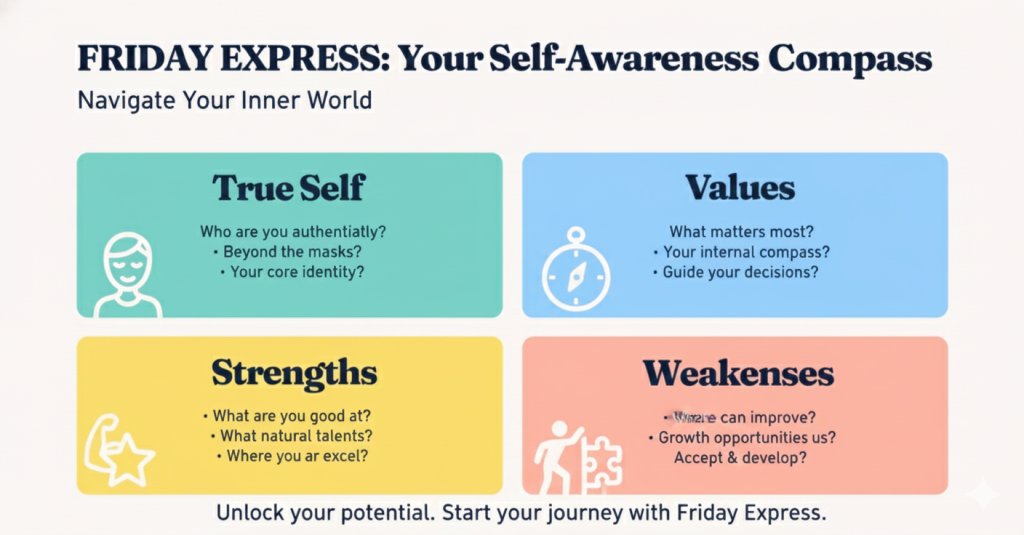
Discovering Your True Self, Values, Strengths, and Weaknesses
In today’s fast-paced world, how to improve self-awareness skills has become a critical question for personal growth, career success, and emotional intelligence. Self-awareness is the foundation of understanding your true self, clarifying your values, recognizing your strengths, and honestly accepting your weaknesses. Without self-awareness, meaningful improvement is difficult.
“Self-awareness is the art of unmasking your true self. By aligning your values, leaning into your strengths, and owning your weaknesses, you stop reacting to life and start leading it.
What Is Self-Awareness?
Self-awareness is the ability to clearly understand your own thoughts, emotions, behaviors, and motivations. It allows you to see yourself objectively and align your actions with your true self and core values.
Improving self-awareness skills helps you:
-
Make better decisions
-
Build stronger relationships
-
Improve leadership and communication
-
Achieve long-term personal and professional growth
What Is Self-Awareness?
Self-awareness is the ability to clearly understand your own thoughts, emotions, behaviors, and motivations. It allows you to see yourself objectively and align your actions with your true self and core values.
Improving self-awareness skills helps you:
* Make better decisions
* Build stronger relationships
* Improve leadership and communication
* Achieve long-term personal and professional growth
How to Improve Self-Awareness Skills: Practical Strategies
1. Connect With Your True Self
Understanding your true self requires reflection and honesty. Ask yourself:
-
What motivates me beyond money or status?
-
When do I feel most authentic?
-
What situations drain or energize me?
Daily reflection and journaling are proven methods to improve self-awareness skills and reconnect with your true identity.
2. Identify and Clarify Your Core Values
Your values shape your decisions and behavior. Without knowing them, you may feel confused or dissatisfied.
To clarify your values:
-
List what matters most to you (integrity, growth, stability, service)
-
Notice patterns in decisions you regret or feel proud of
-
Evaluate whether your current lifestyle reflects those values
This step is essential in learning how to improve self-awareness skills effectively.
3. Recognize Your Strengths Objectively
Self-awareness is not self-criticism. It includes recognizing your strengths and using them intentionally.
Ways to identify strengths:
-
Review past achievements
-
Ask for constructive feedback
-
Observe tasks you perform naturally well
Understanding strengths allows you to grow with confidence while improving self-awareness skills.
4. Acknowledge Your Weaknesses Without Judgment
True self-awareness requires accepting weaknesses honestly. This does not mean self-blame, but self-understanding.
Common approaches:
-
Identify skills you avoid or struggle with
-
Observe repeated mistakes or feedback
-
Separate personal worth from performance
Acknowledging weaknesses is one of the most powerful steps in how to improve self-awareness skills.
5. Practice Mindfulness and Self-Reflection
Mindfulness increases awareness of thoughts and emotions in real time. This practice strengthens emotional intelligence and self-control.
Simple habits include:
-
Daily quiet reflection
-
Breathing exercises
-
Reviewing daily decisions and reactions
Consistent reflection accelerates the process of improving self-awareness skills.
6. Seek Honest Feedback
External perspectives reveal blind spots. Feedback from trusted individuals helps balance internal perception.
When receiving feedback:
-
Listen without defensiveness
-
Look for repeated patterns
-
Use insights to improve awareness of strengths and weaknesses
Feedback is a practical tool in mastering how to improve self-awareness skills.
Self-Awareness and Long-Term Growth
Self-awareness is not a one-time achievement. It evolves as life circumstances change. Regularly reassessing your true self, values, strengths, and weaknesses ensures continuous growth.
Professionals, leaders, and lifelong learners consistently invest in improving self-awareness skills because it directly impacts performance, confidence, and fulfillment.
Final Thoughts
Understanding how to improve self-awareness skills is one of the most valuable investments you can make in yourself. By connecting with your true self, defining your values, leveraging your strengths, and accepting your weaknesses, you create a solid foundation for personal and professional success.
Self-awareness is not about perfection—it is about clarity, alignment, and intentional growth.